
Harbor development represents one of the most technically demanding and strategically significant sectors within the construction and infrastructure industry. A harbor is not merely a docking facility; it is a gateway for trade, economic expansion, maritime logistics, and international connectivity. Modern harbors serve as critical lifelines for import-export activities, offshore operations, industrial supply chains, naval functions, and commercial marine transport. The planning, design, and execution of harbor infrastructure require a multidisciplinary approach that integrates civil engineering, marine engineering, geotechnical analysis, environmental management, and advanced construction methodologies.
Harbor construction begins with extensive feasibility studies and marine surveys. These include hydrographic surveys, tidal analysis, seabed investigations, wave modeling, and soil testing to determine the structural requirements of marine foundations. Understanding underwater terrain and environmental conditions is crucial because marine structures must withstand constant exposure to water currents, salt corrosion, wind loads, and vessel impact forces. Detailed engineering assessments help determine the type of breakwaters, quay walls, jetties, piers, and docking platforms required for the specific maritime function.
Breakwaters are essential components of harbor infrastructure. They protect docking areas from strong waves and turbulent sea conditions, ensuring safe berthing for vessels. Constructed using reinforced concrete caissons, rock armoring systems, or sheet pile walls, breakwaters are designed to absorb and dissipate wave energy. Their structural design must account for long-term erosion resistance, stability against storm surges, and durability under corrosive marine conditions. Advanced materials, including high-strength concrete and anti-corrosion steel reinforcement, are often used to enhance lifespan and reduce maintenance requirements.
Quay walls and berthing structures form the operational backbone of a harbor. These vertical retaining structures support docking vessels and enable loading and unloading activities. Depending on the project scale, quay walls may be constructed using diaphragm walls, sheet piles, gravity structures, or anchored retaining systems. Precision alignment is critical to ensure structural balance and operational efficiency. Heavy-duty fenders and bollards are installed to absorb vessel impact forces and secure ships safely during cargo operations.
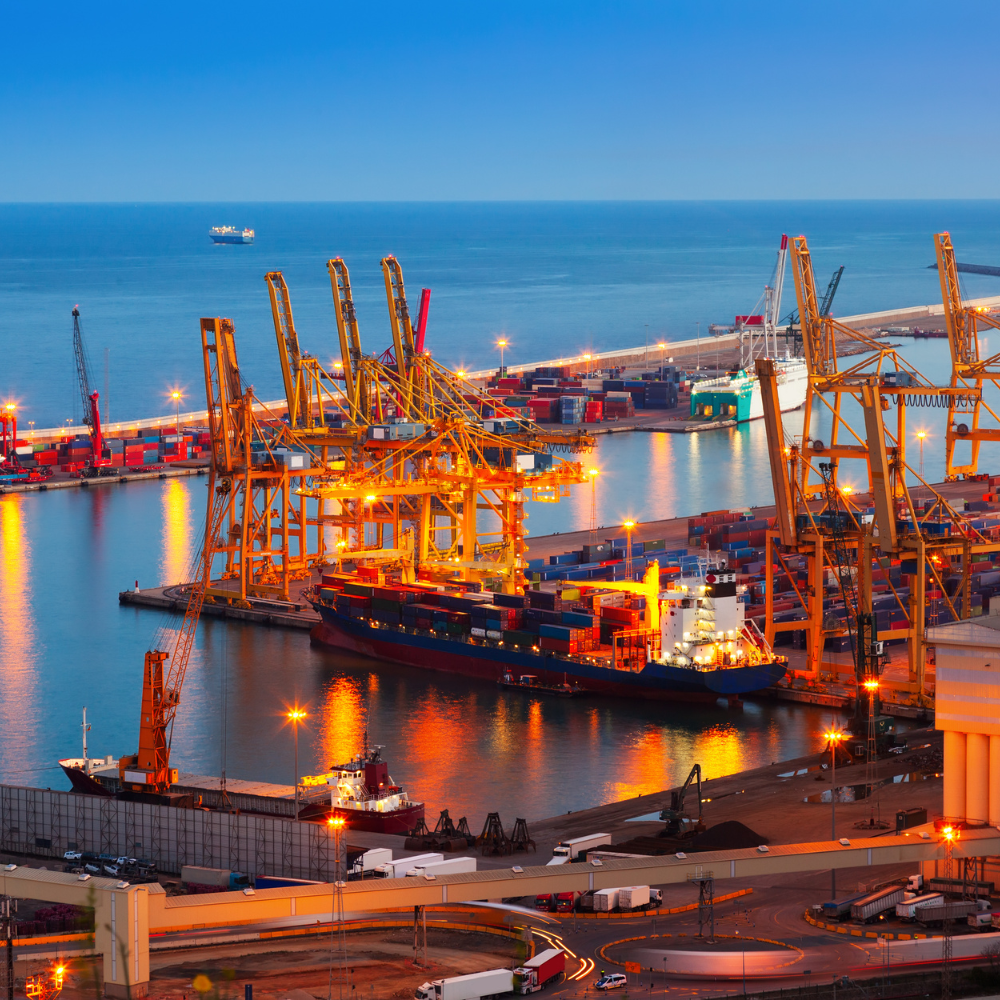
Modern harbors also integrate advanced cargo-handling infrastructure. Container terminals require reinforced pavements, crane rail systems, stacking yards, and logistics zones. The pavement design must withstand high dynamic loads from container cranes and heavy transport vehicles. Structural calculations consider load distribution, soil bearing capacity, and reinforcement detailing to maintain performance under constant operational stress. Warehouses and storage facilities within harbor premises are constructed using steel frameworks and durable cladding systems to ensure weather resistance and operational efficiency.
Marine piling is another crucial aspect of harbor construction. Piles driven deep into the seabed provide foundational stability for piers, jetties, and elevated platforms. These piles may be constructed from reinforced concrete, steel tubular sections, or composite materials depending on load requirements and environmental exposure. Precision equipment is used for pile driving and alignment, ensuring structural integrity under vertical and lateral loads.
Environmental sustainability plays a central role in modern harbor development. Regulatory frameworks require careful assessment of marine ecosystems before construction begins. Environmental Impact Assessments (EIA) evaluate potential effects on aquatic life, water quality, and coastal stability. Construction practices incorporate measures to minimize sediment disruption, manage waste responsibly, and protect surrounding habitats. Sustainable harbor designs often include energy-efficient lighting systems, stormwater management plans, and eco-friendly material usage.
Safety management is paramount in marine construction projects. Harbor sites involve complex logistics, heavy machinery operations, underwater activities, and vessel coordination. Strict adherence to safety protocols, worker training, marine traffic management, and risk mitigation strategies ensures accident prevention and operational discipline. Continuous monitoring and quality inspections are conducted to maintain compliance with international maritime and construction standards.

In addition to commercial ports, harbor development may include specialized facilities such as oil and gas terminals, naval docks, fishing harbors, and recreational marinas. Oil and gas terminals require additional safety features, including spill containment systems, fire protection infrastructure, and corrosion-resistant materials. Naval docks demand reinforced structural capacity to support military vessels, while marinas focus on aesthetic design and hospitality integration.
Technological advancements have significantly transformed harbor construction. Digital modeling, Building Information Modeling (BIM), and 3D simulation tools allow engineers to visualize structures before execution. These tools improve coordination between design teams, contractors, and stakeholders, reducing errors and enhancing project efficiency. Real-time monitoring systems may also be integrated into completed harbor facilities to track structural performance and environmental conditions.
Economic impact is one of the most compelling aspects of harbor infrastructure. A well-developed harbor stimulates regional growth by attracting trade, increasing employment opportunities, and strengthening supply chain networks. It facilitates global commerce and enhances national competitiveness in international markets. The multiplier effect of harbor development extends to transportation, warehousing, manufacturing, and service industries.
Long-term durability and maintenance planning are integral components of harbor projects. Marine environments accelerate material degradation due to saltwater exposure and moisture penetration. Protective coatings, cathodic protection systems, and periodic structural inspections help extend service life. Maintenance strategies are planned during the design phase to ensure sustainability and cost efficiency.